

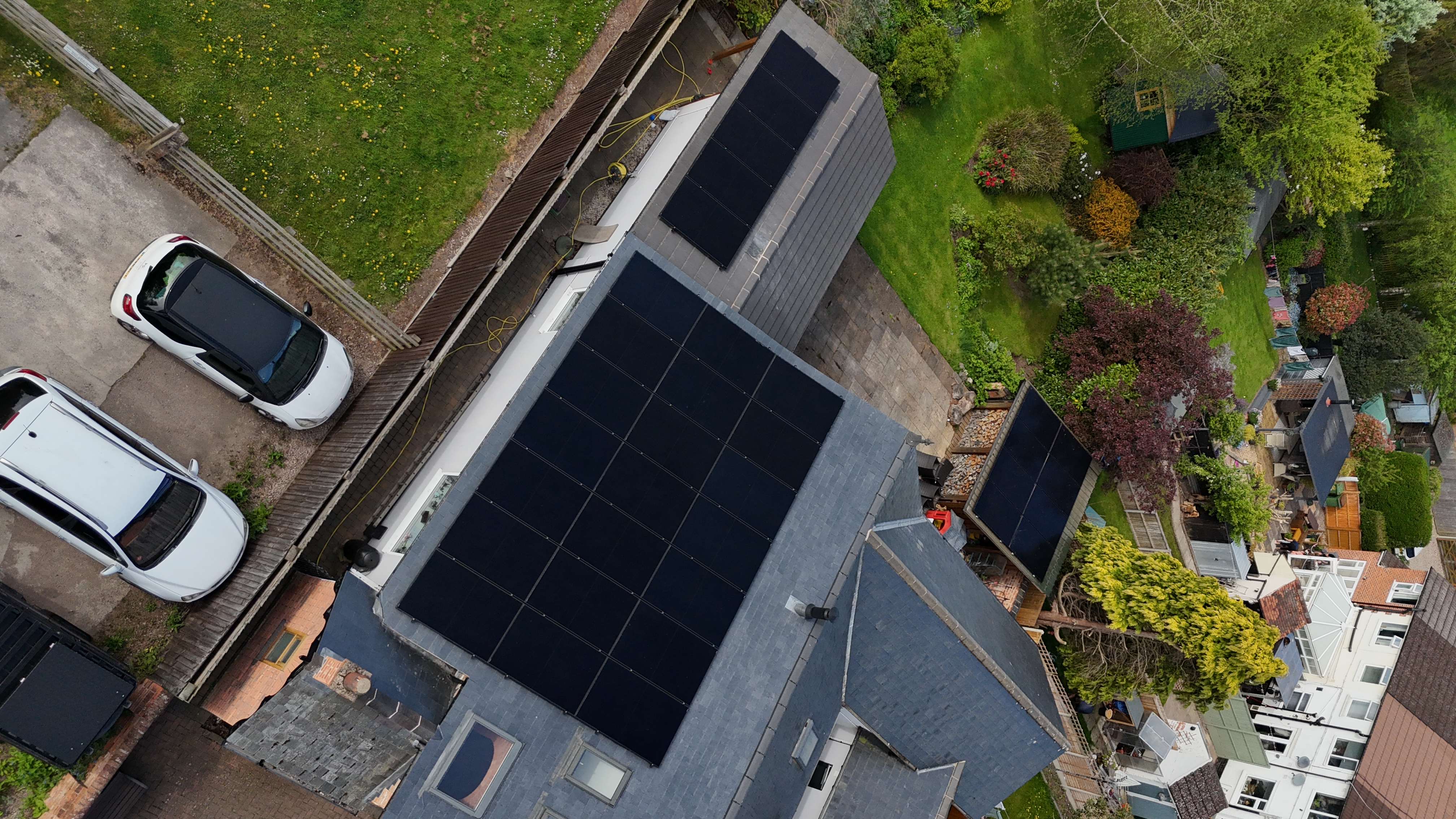
If you live in Leicester, Loughborough, Hinckley or anywhere across Leicestershire, the honest answer to "how much do solar panels cost?" is: it depends on your roof, your electricity use and whether you add a battery. But you can get very close to a real figure before anyone visits. In 2026 a typical Leicestershire home pays roughly £6,000–£8,000 for a 4kW solar system, saves around £700–£1,100 a year, and reaches payback in about six to nine years. This guide from Energy Concerns Ltd, a Leicester-based (LE9) MCS-certified family installer, breaks down real prices by system size, the East Midlands savings you can actually expect, 0% VAT, the SEG export payment and the genuine grants available locally.
Real 2026 solar panel prices in Leicestershire by system size
Prices vary with roof access, scaffolding, panel choice and whether you add battery storage, but here are realistic installed costs for the East Midlands in 2026 (0% VAT included):- 3kW (around 7–8 panels) — roughly £5,000–£6,500. Suits smaller Leicester terraces and lower-usage households.
- 4kW (around 10 panels) — roughly £6,000–£8,000. The most common size for a typical 3-bed semi in Wigston, Blaby or Syston.
- 5–6kW (around 12–15 panels) — roughly £8,000–£11,000. Good for larger family homes with higher usage or an EV.
How much power (and money) solar saves in the East Midlands
Leicestershire sits in a solid, average-to-good part of the UK for solar. A south-facing roof here generates roughly 950–1,050 kWh per kWp of panels each year. So a 4kW system typically produces around 3,800–4,200 kWh annually — a meaningful share of an average home's electricity.Your actual saving depends on how much of that you use yourself versus export. In 2026, with electricity around 27p/kWh, a 4kW system usually saves a Leicestershire household £700–£1,100 a year through a mix of avoided bills and export income. The more daytime electricity you use — working from home, an EV charging in daylight, a heat pump — the higher your self-consumption and the bigger the saving. Adding a battery pushes savings toward the top of that range by shifting solar power to the evening peak. East- and west-facing roofs still work well; they simply spread generation across the morning and afternoon rather than peaking at midday.
Solar panel payback time in Leicester in 2026
Payback is simply how long the savings take to cover the upfront cost. For a typical Leicestershire install in 2026, expect a payback period of about six to nine years, after which the electricity is effectively free for the rest of the system's life.A worked example: a 4kW system at £7,000 saving £950 a year pays back in roughly 7.4 years. With quality panels warrantied for 25 years and inverters lasting 10–12 years, that leaves well over a decade of savings once the system has paid for itself — often £15,000+ in total lifetime savings at today's prices.
What shortens payback? Higher electricity prices, higher daytime usage, a good SEG export rate and no unexpected roof work. What lengthens it? A shaded or complex roof, low daytime occupancy, or an oversized system that exports most of its output cheaply. A proper survey — measuring your roof, orientation and half-hourly usage — gives a far more accurate figure than any online calculator, which is why we size systems to your actual consumption rather than filling every square metre of roof.
0% VAT on solar and batteries until March 2027
One of the biggest current savings is the 0% VAT rate on domestic solar panels and battery storage. Until 31 March 2027, homeowners across Great Britain pay no VAT on the panels, inverter, battery, mounting, scaffolding and labour — provided it is supplied and installed under a single contract by one company. On 1 April 2027 the rate is scheduled to rise to 5%.On a £7,000 install, 0% VAT rather than 20% is worth around £1,400 — a genuine reason not to keep putting the decision off. Since February 2024 the relief also covers standalone batteries retrofitted to an existing solar system, so if you already have panels you can add storage VAT-free too. This is not a grant you apply for; a compliant installer simply applies the zero rate to your quote. The relief applies to residential and charitable properties — commercial buildings are treated differently. If a quote you receive shows VAT added on a domestic install before the deadline, question it.
Getting paid to export: the Smart Export Guarantee (SEG)
When your panels generate more than you use, the surplus flows to the grid and you get paid for it through the Smart Export Guarantee (SEG). Every large energy supplier must offer an SEG tariff, and rates vary a lot — from around 5p up to about 15–16p per kWh in 2026 depending on the supplier and tariff.At the higher end, tariffs such as Octopus Energy's Outgoing (a flat rate around 12p/kWh since March 2026) lead the flat-rate market, while many suppliers' standard SEG rates sit lower, nearer the middle or bottom of that range — so it pays to compare current rates before you sign up. Importantly, you are free to choose any supplier's SEG tariff — it does not have to be the company that supplies your electricity.
Two conditions matter: your system must be MCS-certified (which is why choosing an MCS installer is essential), and you need a smart or export meter so your supplier can measure what you send back. For homes with a battery, a smart tariff plus SEG lets you buy cheap overnight power, store solar for the evening and export at the right moments — squeezing the most value from every kWh.
Real solar grants and schemes for Leicestershire homes
There is genuine funding available, but you must use the real schemes — ignore anyone citing farm-only funds such as the FETF, which do not apply to domestic solar. The schemes that actually help Leicestershire homeowners in 2026 are:- Warm Homes: Local Grant — a government-funded programme delivered through your council offering fully funded energy upgrades, which can include solar PV and battery storage, for eligible households. You generally need a lower EPC rating (around D–G) and either a household income of roughly £36,000 or less (thresholds vary by council) or to receive qualifying benefits. Apply via GOV.UK or your local authority.
- ECO4 — an energy-supplier obligation funding solar and other measures for lower-income and vulnerable households in less efficient homes.
- Solar Together Leicestershire — a council-backed group-buying scheme run with Leicestershire County Council and district councils. Residents register free, and vetted installers compete in an auction to offer a keen price. Rounds run periodically, so check whether it is currently open. It is aimed at all homeowners, not just those on low incomes.
Why choose a local Leicester MCS installer
The single biggest factor in whether solar pays off is the quality of the installation and the accuracy of the system sizing — not the brand of panel. Choosing a local, accredited installer protects your investment and your eligibility for export payments.Energy Concerns Ltd is a Leicester-based (LE9) family installer, fully certified under MCS, RECC, NAPIT and TrustMark. MCS certification is a requirement to claim SEG export payments and is the mark of a compliant, standards-based install. Being local to Leicestershire means we understand the housing stock — from Victorian terraces in the city to newer estates in Blaby, Oadby and Loughborough — and can attend quickly for surveys, servicing and any aftercare.
A good installer will visit, measure your roof and shading, review your actual electricity usage, and size the system honestly rather than overselling. Ask any installer for their MCS number, an itemised quote with 0% VAT shown, panel and inverter warranties, and a clear estimate of annual generation and payback for your specific roof — then compare like for like.
Frequently Asked Questions
Ready to get it installed?
Get your free, no-pressure quotation
Tell us what you’re interested in — solar, battery storage, EV charging or air conditioning — and we’ll come back with an itemised quote. No salesman, no obligation.
A typical 4kW solar system (around 10 panels) costs roughly £6,000–£8,000 fully installed in Leicestershire in 2026, with 0% VAT included. Adding battery storage adds around £2,500–£5,000 depending on capacity. Exact pricing depends on your roof access, scaffolding needs and component choice, so a proper survey gives the most accurate figure.
For a typical Leicestershire home, solar panels pay back in about six to nine years. For example, a 4kW system costing £7,000 and saving around £950 a year pays for itself in roughly 7.4 years, leaving well over a decade of near-free electricity, since quality panels are warrantied for around 25 years.
Yes. Domestic solar panels and battery storage carry 0% VAT until 31 March 2027, provided they are supplied and installed under a single contract. From 1 April 2027 the rate is set to rise to 5%. On a £7,000 install, the 0% rate saves around £1,400 versus standard VAT.
Through the Smart Export Guarantee (SEG), suppliers pay roughly 5p to 15–16p per kWh for surplus power you export. The best rates, such as Octopus Outgoing, sit near the top of that range, while many standard SEG tariffs pay less — so compare current rates. You need an MCS-certified system and a smart or export meter, and you can choose any supplier's SEG tariff regardless of who supplies your electricity.
Yes. The Warm Homes: Local Grant can fully fund energy upgrades, which may include solar and battery storage, for eligible households (typically a lower EPC rating of D–G with income around £36,000 or less, or on qualifying benefits), and ECO4 funds solar for lower-income homes. Solar Together Leicestershire, a council-backed group-buying scheme, runs periodic rounds open to all homeowners. Farm-only schemes like the FETF do not apply to domestic solar.
MCS certification is required to claim Smart Export Guarantee (SEG) export payments and is the recognised standard for a compliant, quality install. Energy Concerns Ltd is MCS, RECC, NAPIT and TrustMark certified. Always ask an installer for their MCS number before signing, as an uncertified install can cost you your export income.
Free, no obligation
Ready to go solar in the East Midlands?
Energy Concerns is MCS certified, RECC registered, and 5-star rated. We cover all of the East Midlands and Warwickshire — book a free survey and we'll give you honest, personalised advice.