

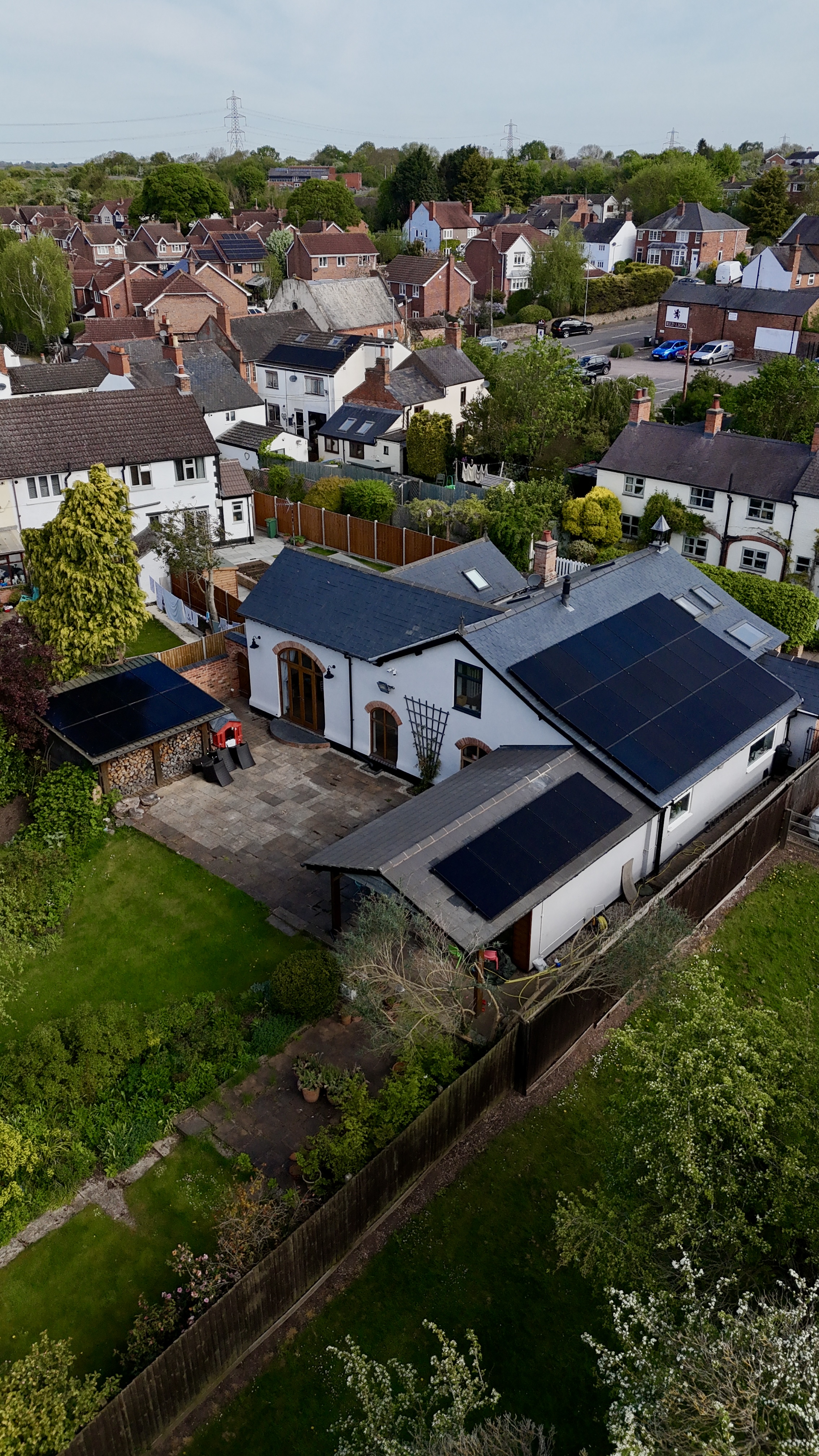
Choosing a solar panel installer in Leicestershire is the single biggest decision in your whole solar project — bigger than the panel brand or the battery. Get it right and you have a system that quietly saves money for 25 years. Get it wrong and you inherit leaks, dead inverters and an installer who no longer answers the phone. This guide, written by the MCS-certified team at Energy Concerns Ltd here in Leicester (LE9), walks you through exactly how to vet a local installer: the MCS and RECC checks that actually matter, the honest trade-offs between a local firm and a national brand, the questions that separate professionals from cowboys, and the red flags that should make you close the door.
Why the installer matters more than the hardware
Solar panels are a commodity. A JA Solar or SolarEdge panel bought by a Leicester installer is the same panel bought by one in Manchester. What differs — dramatically — is the quality of the design and installation wrapped around that hardware.
A good installer sizes your array to your actual roof and consumption, positions panels for the East Midlands sun path, wires and earths everything to standard, and weatherproofs every roof penetration. A poor one bolts on a generic 4kW kit, over-promises the savings, and vanishes the moment a tile cracks.
The financial stakes are real. In the East Midlands a typical roof yields roughly 950–1,050 kWh per kWp per year. A well-installed 4kW system costs around £6,000–£8,000 and saves roughly £700–£1,100 a year, giving a payback of about 6–9 years and clean generation for two decades after that. A badly installed one of the same size can under-generate, void your warranties and cost thousands to remediate.
So before you compare quotes, learn how to compare installers. That is what the rest of this guide is for.
MCS and RECC: the two checks that actually matter
Two accreditations do the heavy lifting when vetting solar panel installers in Leicestershire. Ignore the badges on the van and check these instead.
- MCS (Microgeneration Certification Scheme) — this certifies the installation company against a technical standard. It is not optional if you care about money: an MCS certificate is legally required to claim the Smart Export Guarantee, the scheme that pays you for the electricity you export. No MCS, no export payments — full stop. Verify the company directly on the MCS installer database (mcscertified.com), not just on their website.
- RECC (Renewable Energy Consumer Code) — this is the consumer-protection layer. RECC members sign up to a code covering fair contracts, honest sales claims, deposit protection and a proper complaints route. If a firm is not RECC (or the equivalent HIES) accredited, you have far weaker recourse if the job goes wrong.
Two more worth confirming: NAPIT (or NICEIC) shows the electrical work is competently certified and notified to building control, and TrustMark is the government-endorsed quality mark that is required for grant-funded work. Energy Concerns Ltd holds all four — MCS, RECC, NAPIT and TrustMark — which is the full stack you should be looking for.
Local Leicestershire installer vs national brand
The big national solar brands advertise heavily, but bigger is not automatically better. Here is the honest trade-off for a Leicestershire homeowner.
- Local knowledge: a Leicester-based installer knows the housing stock — the Victorian terraces of the city, the 1930s semis, the newer estates around Blaby, Hinckley and Lutterworth — and the local planning and building-control quirks. That translates into a more accurate survey and fewer surprises on install day.
- Aftercare that shows up: if a panel faults in year four, a firm 15 minutes away in LE9 can be on your roof this week. A national brand routing through a call centre often cannot.
- Accountability: local reputation is everything to a family firm. They rely on word of mouth across Leicestershire, so they cannot afford an unhappy customer the way a churn-driven national operation can.
- Where nationals can win: occasionally on headline price for a bulk-buy standard kit, or availability of a specific finance product. Weigh that against who fixes it in five years.
The best of both worlds is a well-established local installer that uses tier-one hardware (SolarEdge, SigEnergy, Fox ESS, JA Solar) and holds full national-standard accreditation — local presence, national-grade kit and standards.
The questions to ask before you sign anything
Bring this list to every quote. The answers tell you more than the price does.
- What is your MCS certification number? Then verify it yourself on mcscertified.com.
- Are you RECC-registered, and is my deposit protected? A proper firm protects deposits and gives you a cooling-off period.
- Who does the electrical work and how is it certified? Look for NAPIT/NICEIC and a notification to building control.
- What generation figure are you quoting, and how did you calculate it? A credible Leicestershire estimate uses roughly 950–1,050 kWh per kWp, your roof orientation and any shading — not a rounded-up national average.
- Are your panel, inverter and workmanship warranties separate, and how long is each? Panels often carry 25-year performance warranties; inverters 10–12; workmanship should be a meaningful in-house guarantee.
- Will you register my system for the Smart Export Guarantee, and which suppliers pay most? SEG rates vary by supplier — Octopus and British Gas among others — typically around 5–15p per kWh.
- Is the 0% VAT applied? Domestic solar and battery installs are 0% VAT until 31 March 2027, dropping to 5% after. It should already be reflected in your quote.
- Can I speak to two recent local customers? A confident installer says yes immediately.
Red flags: warning signs of a cowboy installer
Some behaviours should end the conversation on the spot. Walk away if you see any of these.
- Pressure and same-day discounts. "This price is only good if you sign today" is a sales tactic, not a solar quote. Good systems are still there tomorrow.
- A large upfront deposit with no protection. Anyone demanding a big cash deposit with no RECC-backed protection is a risk to your money.
- No verifiable MCS number. If they dodge the question or the number does not check out on the MCS database, they cannot register you for export payments.
- Wildly optimistic savings. Claims far above the realistic ~£700–£1,100 a year for a 4kW East Midlands system, or a "free electricity" promise, are a red flag.
- Made-up or misnamed grants. Be very wary of anyone citing schemes that do not apply — the FETF, for example, is a farm-equipment grant and has nothing to do with domestic solar. Genuine support routes are ECO4 and the Warm Homes: Local Grant for eligible low-income households in EPC D–G homes, and Solar Together group-buying where a council actually runs it.
- No written contract or a vague scope. Everything — panel and inverter models, kW rating, price, timeline, warranties — belongs in writing before you pay a penny.
- Cash-only, no paperwork. No certification, no receipts, no proper handover pack means no protection and no export payments.
Your step-by-step vetting checklist
Pull it all together with this simple order of operations when choosing solar panel installers near you in Leicestershire:
- 1. Shortlist local. Start with established installers based in or near Leicestershire who serve your postcode and can visit easily for aftercare.
- 2. Verify the badges. Confirm MCS on the official database, and check RECC, plus NAPIT/NICEIC and TrustMark for grant work.
- 3. Get three quotes. Compare like for like — same kW, same battery spec — not just headline prices.
- 4. Interrogate the numbers. Make sure generation and savings are calculated for your roof using realistic East Midlands yields, and that 0% VAT and SEG registration are included.
- 5. Check references and reviews. Speak to recent local customers and read independent reviews, not just testimonials on the company's own site.
- 6. Read the contract. Confirm deposit protection, warranties and a clear scope in writing before signing.
Follow those six steps and you will filter out the cowboys and land on an installer who does the job properly. As a Leicester-based (LE9), MCS/RECC/NAPIT/TrustMark family firm, Energy Concerns Ltd is happy to be measured against every point on this list. If you would like an honest, no-pressure survey and a quote built on real numbers for your Leicestershire home, get in touch for a free assessment.
Frequently Asked Questions
Ready to get it installed?
Get your free, no-pressure quotation
Tell us what you’re interested in — solar, battery storage, EV charging or air conditioning — and we’ll come back with an itemised quote. No salesman, no obligation.
Go to the official MCS database at mcscertified.com and search by company name or certificate number. Do not rely on a logo on their website or van — verify the certificate is current and covers solar PV. MCS certification is legally required to claim Smart Export Guarantee payments, so this check is non-negotiable.
For most homeowners, yes. A local Leicester or Leicestershire installer knows the regional housing stock and planning quirks, can reach your roof quickly for aftercare, and lives or dies on local reputation. Nationals occasionally win on headline price for standard kits, but weigh that against who will actually service the system in five years. The ideal is a local firm using tier-one hardware with full MCS/RECC accreditation.
A typical 4kW system costs roughly £6,000–£8,000 installed, with 0% VAT applying until 31 March 2027. In the East Midlands you can expect around 950–1,050 kWh per kWp of annual yield, saving roughly £700–£1,100 a year depending on usage and your export tariff. That gives a payback of about 6–9 years, followed by many years of near-free generation.
Genuine support includes ECO4 and the Warm Homes: Local Grant, which can fund solar for low-income or eligible households in EPC D–G properties, plus Solar Together group-buying schemes where a council actually runs one. Beware any installer citing the FETF — that is a farm-equipment grant and does not apply to domestic solar. Grant-funded work must be carried out by a TrustMark-registered installer.
High-pressure same-day discounts, large unprotected upfront deposits, no verifiable MCS number, unrealistic savings claims, references to grants that do not apply, no written contract, and cash-only jobs with no certification. Any one of these is reason enough to walk away and get another quote from a properly accredited local firm.
Free, no obligation
Ready to go solar in the East Midlands?
Energy Concerns is MCS certified, RECC registered, and 5-star rated. We cover all of the East Midlands and Warwickshire — book a free survey and we'll give you honest, personalised advice.