

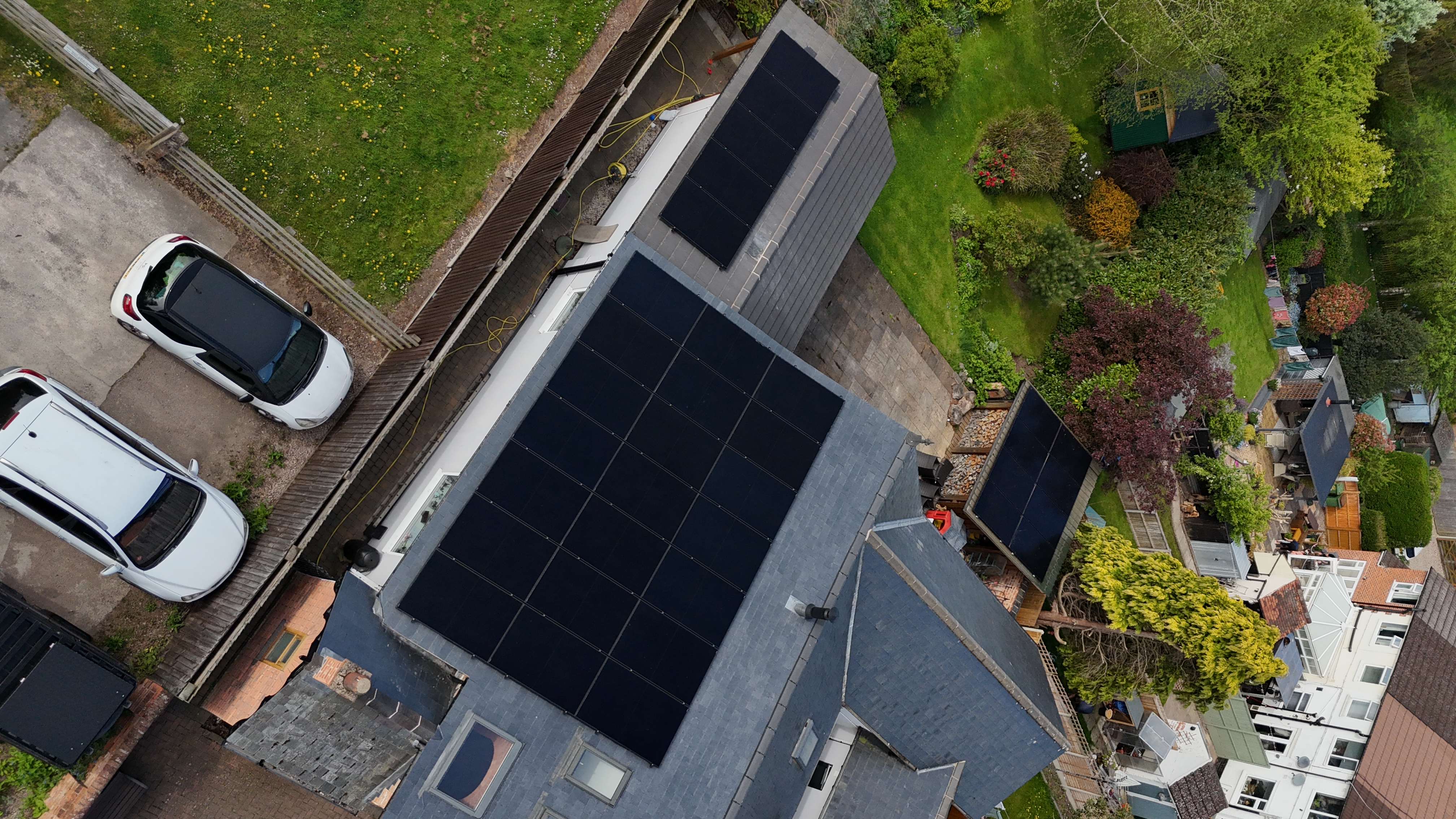
If you have solar panels on a semi in Oadby, a 1970s detached in Wigston or a new-build in Lubbesthorpe, you have probably watched your inverter export cheap power to the grid all afternoon, then bought it back at peak rates by teatime. A home battery closes that gap. But the honest question every Leicestershire homeowner asks us first is: what does it actually cost, and does the maths work? This guide from Energy Concerns Ltd, a Leicester-based (LE9) MCS, RECC, NAPIT and TrustMark installer, walks through 2026 battery prices, sizing, the leading brands, time-of-use tariff savings and realistic payback for East Midlands homes, using real numbers and no invented grants.
What home battery storage costs in 2026 (real £/kWh)
In 2026 the fairest way to compare batteries is cost per usable kWh of storage, installed. As a rule of thumb across the market, a fitted home battery lands at roughly £400-£700 per usable kWh. So a typical mid-size install for a Leicestershire family home works out like this:- 5 kWh usable: around £2,500-£4,000 installed
- 10 kWh usable: around £4,500-£6,500 installed
- 13-14 kWh usable: around £6,000-£9,000 installed
Sizing your battery: don't buy more than your home actually cycles
Oversizing is the most common and most expensive mistake we correct in Leicestershire homes. A battery only saves you money on the kWh it actually charges and discharges each day. Size it to how much electricity you use in the evening and overnight, not to the biggest number a salesperson can quote.- Low user (flat or terrace, e.g. Clarendon Park, city centre): ~2,000-3,000 kWh/yr. A 5 kWh battery is usually plenty.
- Average family (3-bed semi, Blaby, Glen Parva, Narborough): ~3,500-4,500 kWh/yr. 8-10 kWh is the sweet spot.
- High user (larger detached with EV or heat pump, Kibworth, Great Glen, Market Bosworth): 5,000 kWh+. 13-15 kWh or a stackable system earns its keep.
SigEnergy vs Fox ESS
The two brands Energy Concerns installs cover most East Midlands quotes in 2026. Here is the straight comparison.- Sigenergy SigenStor: a modular all-in-one (hybrid inverter, stackable LFP battery, optional EV charging) that scales from around 5 kWh to 54 kWh, backed by a 15-year warranty. An 18 kWh configuration typically runs ~£6,000-£7,500 installed, making its £/kWh very competitive. LFP chemistry, IP66 outdoor rating and near-instant backup. Our premium pick — best if you want to expand later or integrate EV charging.
- Fox ESS: a well-established manufacturer offering modular LFP batteries from around 5 kWh upwards, with very competitive £/kWh and a well-regarded app. Best if you want strong value with the flexibility to start smaller and add capacity later.
Time-of-use tariffs: where a battery really pays in the East Midlands
A battery's biggest earnings come from arbitrage, buying cheap and using it at peak, made possible by smart time-of-use tariffs. This is where a well-sized system in Leicester or Loughborough genuinely shifts the numbers.- Cheap overnight import: tariffs such as Intelligent Octopus Go offer roughly 7p/kWh overnight (versus a peak/day rate several times higher). Charge the battery in the small hours, run the house on it by day.
- Multi-window tariffs: Octopus Cosy offers around 13p/kWh in set daily windows, useful for heat-pump homes.
- Export earnings (SEG): the Smart Export Guarantee pays for power you export. Flat rates like Octopus Outgoing sit around 12-15p/kWh, British Gas has offered around 15.1p/kWh to its own import customers, and time-varying export tariffs can pay up to roughly 30p/kWh at the 4-7pm peak. Rates vary by supplier and can change on about 30 days' notice, so check current terms.
Realistic payback for a Leicestershire home
Payback depends on how hard the battery is worked. A battery bolted onto solar purely to store daytime surplus for evening use typically pays back over a longer horizon than one actively cycled on a cheap-overnight tariff. As context, solar alone in the East Midlands stacks up well: a 4 kW system costs roughly £6,000-£8,000, saves around £700-£1,100 a year and pays back in about 6-9 years. Adding a battery increases self-consumption (often from ~40% to 70-80% of what you generate) and unlocks tariff arbitrage, but it also adds cost, so it lengthens the blended payback unless you run it hard.In practical terms, a battery worked daily on a smart tariff, charging cheap overnight and discharging at peak, can save a typical Leicestershire family in the region of £400-£600+ a year beyond their solar savings, giving battery-only paybacks that can land inside the warranty period. A battery that just mops up a bit of summer surplus will take longer. The deciding factors are your usage, your tariff and correct sizing, which is exactly why we model your figures before quoting rather than quoting a generic number. Warranties on quality LFP batteries commonly run to 10 years, so a system that pays back well within that is doing its job.
Grants and support for East Midlands homes (accurate schemes only)
There is a lot of misinformation online about battery grants, so here is what genuinely exists in 2026, and what does not.- 0% VAT: the biggest 'grant' most homeowners get. 0% VAT on domestic solar and battery installs runs until 31 March 2027 (then 5%). Available to everyone, no means-testing.
- ECO4 and the Warm Homes: Local Grant: these fund energy-efficiency measures including solar for eligible low-income households and certain EPC D-G properties. ECO4 has now closed to new applications and the Warm Homes: Local Grant (administered by local councils) is the current route for new applicants. Leicester City and Leicestershire councils promote related support; check eligibility via Warm Homes Leicestershire.
- Solar Together Leicestershire: a council-backed group-buying scheme (partners include Blaby, Charnwood, and Hinckley & Bosworth) that can lower per-home solar/battery prices, worth comparing against a direct MCS quote.
- EV chargepoint grant (~£350): for flat owners and renters, this replaced the older domestic OZEV grant, relevant if you are pairing a battery with EV charging.
Frequently Asked Questions
Ready to get it installed?
Get your free, no-pressure quotation
Tell us what you’re interested in — solar, battery storage, EV charging or air conditioning — and we’ll come back with an itemised quote. No salesman, no obligation.
Expect roughly £400-£700 per usable kWh installed. A 5 kWh battery is around £2,500-£4,000, a 10 kWh around £4,500-£6,500, and a 13-14 kWh unit around £6,000-£9,000 fitted, including inverter electronics, cabling and MCS certification. 0% VAT applies to domestic installs until 31 March 2027, after which it rises to 5%.
The Sigenergy SigenStor is our premium pick: a modular all-in-one (5-54 kWh) with a 15-year warranty, competitive £/kWh and easy expansion or EV integration, ideal if you want the best specification or room to grow. Fox ESS is the best-value modular option, ideal if you want strong value and the flexibility to start smaller. The best choice depends on your loads, roof and budget, which we assess before quoting.
Yes. Fox ESS is a well-established manufacturer offering modular LFP batteries from around 5 kWh upwards, with competitive pricing per kWh and a solid monitoring app. It suits homeowners who want strong value with the flexibility to start smaller and expand later. As an MCS-certified installer we specify SigEnergy or Fox ESS to match your home.
Smart tariffs let you charge the battery on cheap overnight electricity (for example around 7p/kWh on Intelligent Octopus Go) and run your home on it during expensive peak hours. Combined with self-consuming your solar and earning Smart Export Guarantee payments (roughly 12-15p/kWh flat, or up to ~30p/kWh on peak export tariffs), a well-sized battery can add several hundred pounds of annual savings. MCS certification is required to register for SEG.
It depends how hard the battery is cycled. Solar alone typically pays back in about 6-9 years here. A battery worked daily on a cheap-overnight tariff can save a family £400-£600+ a year on top of solar, giving a battery payback that can fall within its 10-year warranty. A battery only used to store occasional summer surplus takes longer. We model your specific figures before quoting.
The main saving is 0% VAT on domestic installs until 31 March 2027 (then 5%). The Warm Homes: Local Grant (which has replaced ECO4 for new applicants) supports eligible low-income and EPC D-G households, and the council-backed Solar Together Leicestershire group-buy (Blaby, Charnwood, Hinckley & Bosworth and others) can lower prices. There is no 'FETF' grant for domestic solar and no universal free-battery scheme, so treat such claims with caution.
Free, no obligation
Ready to go solar in the East Midlands?
Energy Concerns is MCS certified, RECC registered, and 5-star rated. We cover all of the East Midlands and Warwickshire — book a free survey and we'll give you honest, personalised advice.