

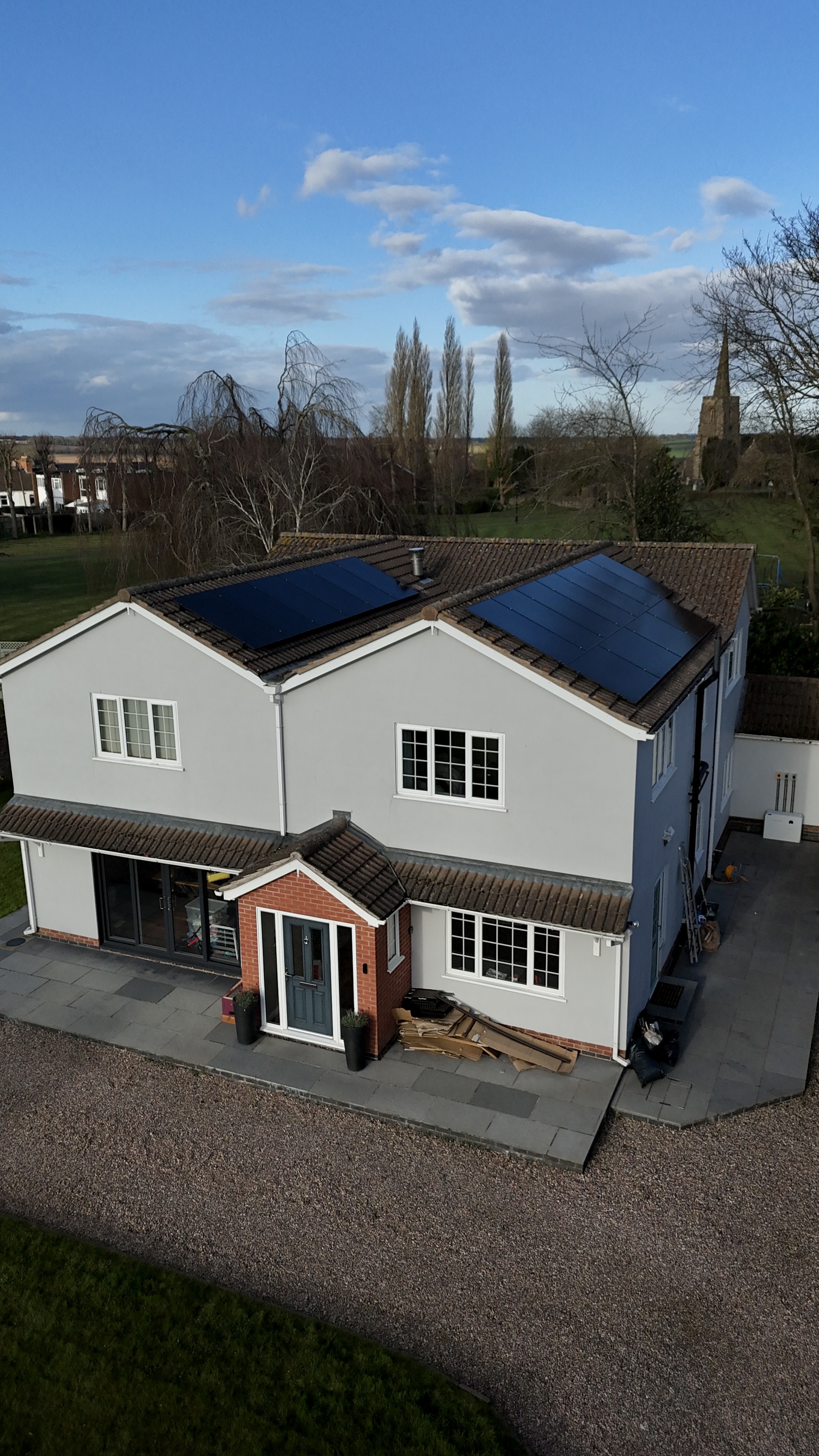
If your roof is approaching the end of its life — typically 40–60 years for concrete tiles, 80–100 years for slate — the question of whether to replace it before or alongside solar panels is one of the smartest decisions a homeowner can make. Getting the timing right can save thousands of pounds and ensure your solar investment lasts its full 25+ year warranted lifespan without interruption.
This guide explains when combining re-roofing and solar makes financial sense, the different integration options available, costs for East Midlands properties, and what the Future Homes Standard means for roof-level energy generation.
When Should You Combine Re-Roofing and Solar?
The decision depends on your roof's remaining lifespan. Here's our guidance based on thousands of roof assessments across Leicestershire:
Roof is 0–15 years old
Install solar directlyModern roof coverings in good condition will outlast your solar panels. Standard on-roof installation with roof hooks is the most cost-effective approach.
Roof is 15–30 years old
Assess condition carefullyIf tiles are in good condition with no leaks or deterioration, solar can typically be installed with confidence. If there are signs of wear, consider combining re-roofing and solar now rather than paying twice for scaffolding later.
Roof is 30–50+ years old
Combine re-roofing and solarA roof nearing end of life will likely need replacing during the 25-year solar panel warranty period. Combining both projects shares scaffolding, prevents future disruption, and allows you to specify in-roof or integrated panels for a seamless finish.
The Financial Case for Combining Projects
The primary saving comes from shared scaffolding. Scaffolding a typical semi-detached house costs £1,500–£3,000 and is required for both re-roofing and solar installation. Doing both projects together means paying for scaffolding once instead of twice.
| Cost Element | Separate Projects | Combined Project | Saving |
|---|---|---|---|
| Scaffolding | £3,000–£6,000 (twice) | £1,500–£3,000 (once) | £1,500–£3,000 |
| Re-roofing | £5,000–£10,000 | £5,000–£10,000 | — |
| Solar installation | £5,000–£8,000 | £5,000–£8,000 | — |
| Panel removal/refit (future) | £1,000–£2,000 | Not required | £1,000–£2,000 |
| Project management | 2 separate projects | 1 coordinated project | Less disruption |
Total potential saving: £2,500–£5,000
By combining re-roofing and solar installation into a single project, you avoid duplicate scaffolding costs and eliminate the future expense of removing and refitting panels for roof work.
Solar Panel Integration Options
When combining re-roofing and solar, you have three integration approaches:
1. Standard On-Roof Panels (Most Common)
Conventional solar panels mounted on brackets above the new roof tiles. This is the most cost-effective option and suits the vast majority of properties. The new roof is laid first, then solar panels are mounted on top using standard roof hooks that sit under the tiles.
2. In-Roof / Integrated Panels (Premium)
Panels replace the roof tiles in the area they cover, sitting flush with the roofline. This creates the most aesthetically pleasing finish and is the preferred option for conservation areas, listed buildings, and homeowners who prioritise appearance. The panels are installed as part of the roofing process — no tiles are laid beneath them.
3. Solar Roof Tiles (Specialist)
Individual tiles that generate electricity — such as the Marley SolarTile — replace standard tiles across the entire roof or specific sections. Each tile is a miniature solar panel. This option provides the most seamless appearance but at a significant cost premium. It is primarily suited to new builds and high-end renovations where aesthetics are the primary concern.
Property Types & Re-Roofing Solar in the East Midlands
Different property types in our service area present different re-roofing and solar opportunities:
Victorian Terraces (Leicester, Nottingham)
Slate roofs 100+ years old are common. Many still have original Welsh slate that is reaching end of life. Rear-slope solar installations on re-roofed terraces work excellently. In-roof systems preserve the character of conservation areas like Clarendon Park and Stoneygate.
Inter-War Semis (1930s–1940s)
The most common property type in our service area. Original concrete tiles typically last 50–60 years, meaning many 1930s roofs are now due for replacement. These properties are the sweet spot for combined re-roofing and solar — large south-facing rear slopes, standard roof pitches, and straightforward access.
Farmhouses & Rural Properties (Melton, Oakham, Market Harborough)
Stone slate and clay tile roofs require specialist re-roofing. These properties often have the largest roof areas and highest electricity consumption, making the solar investment particularly compelling. Collyweston slate and Swithland slate properties need experienced handling.
Post-War Estates (1950s–1970s)
Many concrete interlocking tile roofs from this era are now 50–70 years old and approaching replacement age. These are typically straightforward re-roofing and solar projects with good access and uniform roof designs across estate blocks.
The Future Homes Standard & Solar
The Future Homes Standard 2025 requires all new-build homes to have low-carbon heating systems and produce 75–80% fewer carbon emissions than current Building Regulations. From 2025, new homes will need to meet stringent fabric efficiency and energy generation requirements — effectively making roof-level solar generation standard for new construction.
While the Standard does not directly apply to existing homes undergoing re-roofing, it signals the direction of UK building policy. The NHBC (National House Building Council) already requires builders to consider renewable energy in their designs, and mortgage lenders are increasingly factoring EPC ratings into lending decisions.
Combining re-roofing with solar installation future-proofs your property against anticipated tightening of energy performance requirements. A re-roofed home with integrated solar panels will have a significantly better EPC rating — directly affecting property value and mortgage eligibility.
How Energy Concerns Manages Combined Projects
Energy Concerns coordinates both the re-roofing and solar elements of combined projects. Our process:
Free Survey & Roof Assessment
We assess your roof condition, solar potential, and property requirements. If re-roofing is needed, we discuss options and provide a combined quotation.
Roofing Specification
We work with trusted, vetted roofing contractors to specify the roof covering and ensure it is compatible with your chosen solar mounting system or in-roof solution.
Coordinated Scaffolding
A single scaffolding erection serves both the re-roofing and solar installation — the primary cost saving of combining projects.
Re-Roofing Phase
The roofing contractor completes the roof replacement. For in-roof solar, the panel mounting framework is integrated during this phase.
Solar Installation
Our directly-employed engineers install, wire, test, and commission the solar panel system. For standard on-roof panels, this follows the completed re-roofing. For in-roof, it happens concurrently.
Certification & Handover
MCS certification, system commissioning, monitoring setup, and full homeowner training. Both the roof and solar carry their respective guarantees.
Frequently Asked Questions
If your roof will need replacing within the next 10–15 years, we strongly recommend combining re-roofing and solar installation into a single project. This shares scaffolding costs (saving £1,500–£3,000), avoids the expense of removing and refitting panels later, and ensures the roof structure is optimal for solar mounting. If your roof is in good condition and less than 15 years old, solar can be installed directly with standard roof hooks.
A typical re-roofing project for a semi-detached home costs £5,000–£10,000 depending on materials and scope. Adding solar panels to this project costs £5,000–£8,000 for a 3–5kW system. The combined cost of £10,000–£18,000 is typically £1,500–£3,000 less than doing the projects separately, because you share scaffolding, access costs, and project management. 0% VAT applies to the solar element.
In-roof (or integrated) solar panels replace the roof tiles in the area they cover, sitting flush with the roofline rather than mounted above it. Products like Viridian Clearline Fusion, Marley SolarTile, and GSE Integration provide this option. In-roof systems are more aesthetically pleasing, ideal for conservation areas or listed buildings, and are the most practical choice when re-roofing simultaneously. They cost 10–20% more than standard on-roof panels but eliminate the need for roof tiles beneath them.
No. Standard solar panel mounting systems use roof hooks that sit under existing tiles without penetrating the roof membrane. The panels are securely fixed to roof battens through the tile courses. Energy Concerns' directly-employed engineers are trained in roof-safe installation techniques, and our 5-year workmanship guarantee covers any roof-related issues arising from installation.
The Future Homes Standard 2025 requires all new-build homes to have low-carbon heating from 2025, with the full specification expected by 2026. While this does not directly apply to re-roofing existing homes, it signals the direction of building regulations. Combining re-roofing with solar installation future-proofs your property against anticipated tightening of energy performance requirements for all homes.
.jpg)