

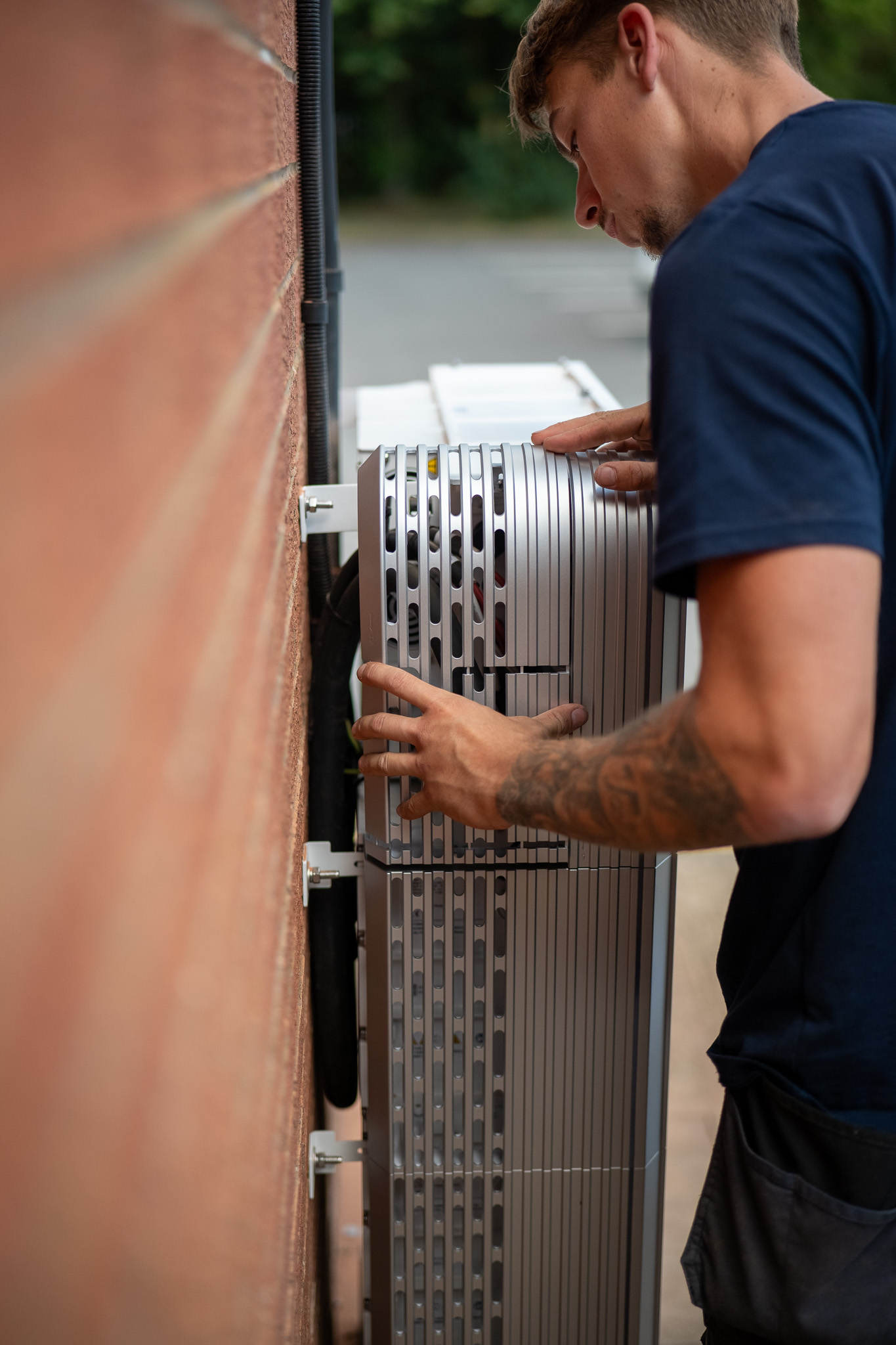
Stafford is Staffordshire's county town — and one of the most solar-ready mid-sized towns in the West Midlands. Its 70,000 residents live predominantly in exactly the property types that benefit most from solar panels: 1930s–1960s semi-detached homes with south or south-west facing rear roof slopes, minimal shading, and good structural condition. As the administrative and professional hub of Staffordshire, the town has above-average household incomes and energy consumption — meaning solar savings are larger here than in more rural parts of the county. Energy Concerns installs across all ST16–ST20 postcodes.
Stafford's Housing Stock: Why It's Ideal for Solar
The single most solar-suitable property type in the UK is the 1930s–1960s semi-detached home. Stafford has an unusually high proportion of this housing type, concentrated in the large residential estates that grew up around the town's inter-war and post-war expansion:
Rickerscote and Wildwood (ST17): The largest residential area in Stafford, dominated by semi-detached and detached homes from the 1940s–1970s. South and south-west facing rear slopes are standard on most streets. 3–5kW systems are typical, with many properties suited to 4kW arrays that maximise return on investment.
Tillington (ST16): Mixed area combining Victorian terraces in the older streets near the town centre with 1970s–1980s detached homes on the Tillington Road corridor. Good variety of solar opportunities — terraces suited to 2–3kW systems, detached homes to 4–6kW.
Holmcroft (ST16): Northern Stafford residential area with large 1960s–1970s detached properties. Above-average roof area suits 5–6kW systems with battery storage. Good demand for combined solar + EV charger packages among the professional households here.
Rowley Park (ST17): Sought-after southern Stafford area with substantial 1920s–1950s detached homes. Premium solar market — larger systems with battery storage and EV chargers are popular. High home ownership among professionals commuting to Birmingham via the M6.
Weeping Cross and Baswich (ST17): Southern fringe of Stafford with modern 1990s–2000s detached and semi-detached development. Newer builds often have south-facing roof designs and good suitability for 4–5kW systems.
Stafford's Solar Yield
Stafford sits in central Staffordshire at moderate elevation — neither the Staffordshire moorlands to the north nor the sheltered Severn basin to the south. The town receives approximately 1,380 sunshine hours annually. A well-oriented 4kW system generates 3,200–3,400 kWh per year, saving £770–£960 per year at current electricity prices. Adding a GivEnergy 9.5kWh battery typically adds £350–£550 per year in additional savings by storing afternoon solar generation for evening use.
Stafford as a Commuter Hub: The EV Charger Case
Stafford's position on the West Coast Main Line and the M6 makes it a genuine commuter hub for Birmingham, Wolverhampton, and Stoke-on-Trent. Residents commuting to Birmingham by train have 45-minute journeys and many have switched from car to EV for local trips while commuting by rail. This drives above-average EV ownership in the town. The combination of solar + Zappi V2 EV charger is particularly popular in Stafford: the Zappi automatically detects surplus solar generation and diverts it directly to the car — charging at 0p/kWh rather than the overnight grid rate of 7p/kWh (Octopus Go).
For a Stafford household with a PHEV doing 12,000 miles annually, solar diversion covers 40–60% of charging between April and September. Combined with overnight Octopus Go charging at 7p/kWh for winter months, total annual EV charging costs are typically £150–£250 — compared to £1,400–£1,800 in petrol equivalent.
Typical Installation Costs in Stafford
- 4kW solar system (semi-detached, standard installation): £6,200–£7,500
- 4kW solar + GivEnergy 9.5kWh battery: £10,500–£12,500
- 5kW solar + SigEnergy 10kWh battery (larger detached): £12,500–£15,000
- Hypervolt Home 3 EV charger (7kW, OZEV grant applied): £900–£1,200
- Zappi V2 EV charger (solar diversion, OZEV grant applied): £950–£1,250
- Combined solar + battery + EV charger package: Typically £500–£800 labour saving vs separate installations
All solar and battery installations are at 0% VAT. The OZEV grant (£350) is applied directly to EV charger invoices — you never handle the money.
Stafford FAQs
Does Stafford Borough Council offer solar grants? Stafford Borough Council supports Staffordshire County Council's net-zero strategy and all national schemes apply: Smart Export Guarantee, ECO4 for eligible households, 0% VAT on solar, and OZEV grant for EV chargers. There are no additional local Stafford-specific solar grants at present.
Is my 1930s semi-detached in Rickerscote suitable for solar? Almost certainly yes. 1930s semi-detached homes in Rickerscote and Wildwood are among the most solar-suitable property types we install on — good roof pitch (typically 35–45 degrees), south or south-west facing rear slopes, and solid tiled roofs in good structural condition. Energy Concerns surveys every Rickerscote home individually, but the failure rate for this property type is very low.
How long does a Stafford solar installation take? A typical 4kW system with battery storage is installed in a single day. Larger systems (5–6kW) or combined solar + battery + EV charger installations typically take 1.5 days. We provide a fixed installation date and timeline at quote stage.
Get a free solar survey for your Stafford property — Energy Concerns provides MCS-certified installation across all Staffordshire postcodes, with fixed-price quotes within 48 hours.
Free, no obligation
Get a Quote for Stafford
Energy Concerns is MCS certified, RECC registered, and 5-star rated. We cover all of the East Midlands and Warwickshire — book a free survey and we'll give you honest, personalised advice.
.jpg)