

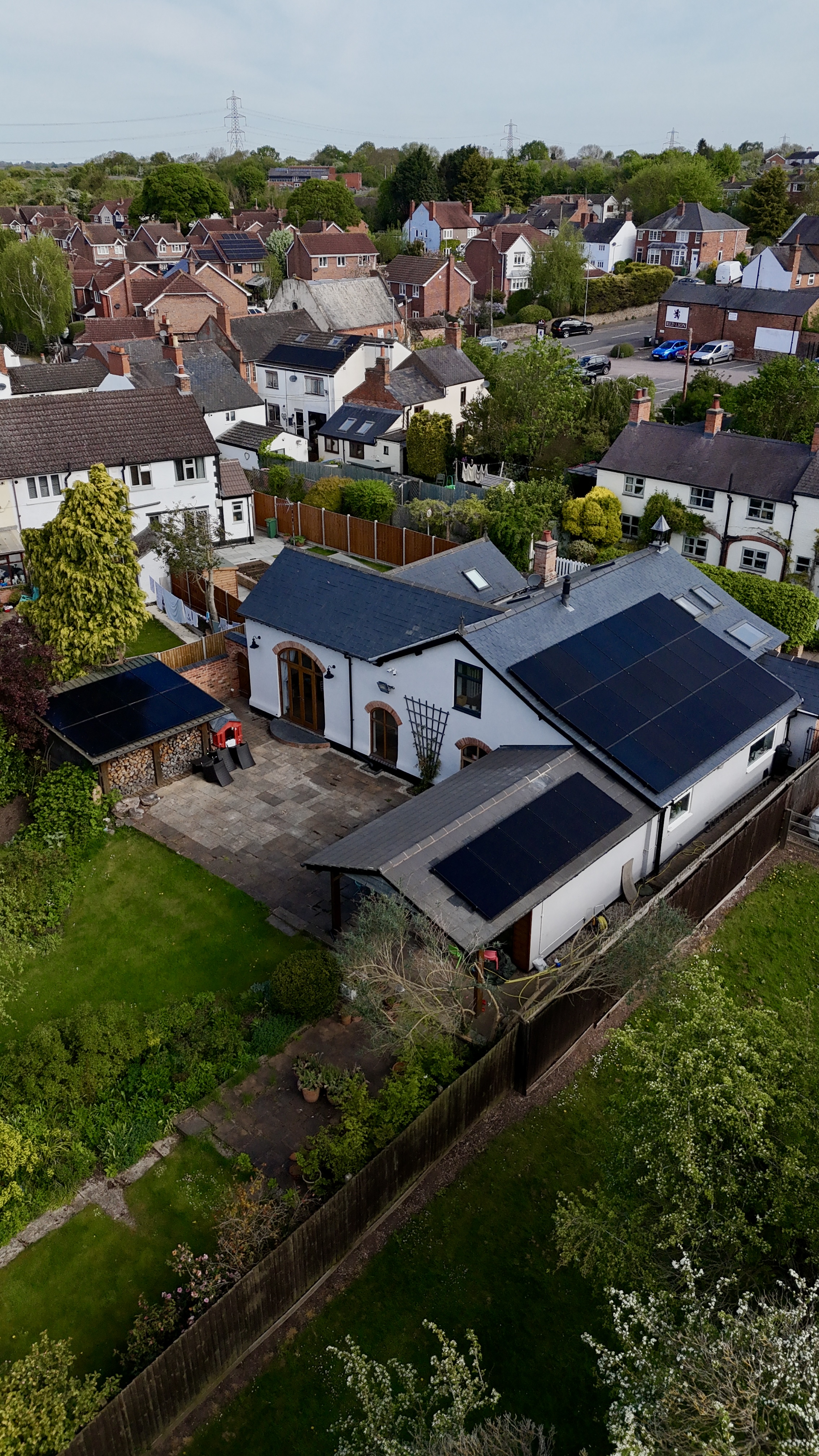
If you have solar panels and a battery in Leicestershire — or you are weighing them up — the tariff you sit on decides a huge slice of your annual saving. Octopus Energy runs three time-of-use tariffs that reward you for shifting when you use and export power: Flux, Agile and Go. Each one suits a different setup, from a battery-only home in Oadby to a full solar-plus-storage system in Market Harborough or Hinckley. This guide, written by the Leicester-based (LE9) MCS-certified team at Energy Concerns Ltd, explains exactly how each tariff works, when to charge and when to export, the realistic savings on East Midlands yields, and how to pick the right one for your home.
Why time-of-use tariffs matter for Leicestershire homes
A standard flat-rate tariff charges the same price whenever you use electricity and pays a single Smart Export Guarantee (SEG) rate for what you export. Time-of-use tariffs flip that: the price of power changes through the day, and on Octopus's time-of-use export tariffs the rate you earn for exporting can be far higher at certain hours than a standard flat SEG rate. The lever you pull is a home battery — it lets you buy or bank cheap power and use or sell it when prices peak.
Leicestershire is well suited to this. A typical roof here yields around 950–1,050 kWh per kWp a year, so a 4kW array produces roughly 3,800–4,200 kWh — enough to cover a big share of a family home in Wigston, Loughborough or Melton Mowbray, with a genuine summer surplus to export. Our county's mix of 1930s semis in Leicester, newer estates around Braunstone and Glenfield, and rural homes across Harborough and Charnwood districts all work, provided the roof gets reasonable south, east or west light.
Crucially, all three Octopus tariffs below require a working smart meter and, for export payments, MCS certification of your install — one reason to use an MCS-registered installer from the outset.
Octopus Flux: built for solar and battery
Flux is Octopus's dedicated solar-and-battery tariff, and for most Leicestershire homes with both, it is the natural fit. It has three price bands in a 24-hour cycle:
- Cheap overnight window (roughly 02:00–05:00): import is at its lowest — the time to top up your battery from the grid if a dull day is forecast.
- Peak evening window (roughly 16:00–19:00): both import is dearest and export pays the most. This is when you discharge your battery to power the house and push any surplus to the grid for the premium export rate.
- Day rate: everything else sits at a middle price.
The winning routine on Flux: let solar fill the battery through the day, avoid grid import in the pricey evening peak by running off stored power, and export whatever is left during that peak window when the export rate is highest. Rates on Flux flex with the wholesale market, so exact pence figures move, but the structure consistently rewards a solar-plus-battery home. For a Leicestershire household with a 4–5kWp array and a 5kWh-plus battery, Flux typically extracts the most value from a system that would otherwise export cheap midday surplus and buy back expensive evening power.
Octopus Agile: for the hands-on optimiser
Agile prices import in half-hourly slots that track wholesale electricity, published a day ahead. Prices can dip very low overnight or on windy afternoons — and occasionally go negative, meaning you are paid to use power — but they can also spike sharply at the 16:00–19:00 national peak. There is a separate Agile export product that pays a variable, half-hourly rate for what you send back.
Agile rewards flexibility. If your battery and EV charging can follow a schedule that hunts out the cheapest half-hours, you can beat a fixed tariff. That suits homes with a smart battery system, an app-savvy owner, and appliances (dishwasher, washing machine, immersion) that can run when power is cheapest. It is less forgiving if your usage is fixed around a busy evening peak, because you are exposed to those spikes.
For a Leicestershire home with solar, a well-sized battery and someone happy to lean into automation, Agile can outperform Flux in the right conditions. For a set-and-forget household, the variability is a downside rather than a feature — Flux's predictable bands are usually easier to live with and still very effective.
Octopus Go: EV drivers, with or without a battery
Go is an EV tariff. It gives a fixed, very cheap overnight import rate for a set window (commonly around 00:30–05:30), with a higher flat rate the rest of the day. It was designed for charging an electric car cheaply overnight, but it works just as well for filling a home battery in those hours.
Go suits two Leicestershire profiles. First, EV drivers — with the county's growing charge-point network and plenty of driveway charging across suburban Leicester, Blaby and Oadby-and-Wigston, cheap overnight miles add up fast. Second, homes with a battery but little or no solar, or solar plus a battery where you want dead-simple, predictable cheap-rate charging rather than Agile's day-to-day variation.
Go's export rate is generally more modest than Flux's premium evening rate, so if maximising export earnings from a solar surplus is your priority, Flux usually edges it. If your main goal is cheap EV charging and easy battery top-ups, Go is the cleaner choice. Some households even move between tariffs seasonally as their pattern changes.
When to charge and when to export: a simple rulebook
The mechanics are the same across tariffs — buy or bank power when it is cheap, use or sell it when it is dear. Here is the practical routine we set up for Leicestershire clients:
- Charge the battery during the cheap overnight window (Flux ~02:00–05:00, Go's fixed cheap hours, or Agile's lowest half-hours) — but only as much as you will need, so you leave room for free solar the next day.
- Prioritise solar self-consumption through the day. Every kWh you use from your own panels displaces grid power at the day rate.
- Bank the midday surplus in the battery rather than dumping it to the grid at a low midday export price.
- Discharge and export in the evening peak (16:00–19:00) on Flux, when both avoided import and export earnings are highest.
- Automate it. A modern hybrid inverter and battery can run these rules automatically once configured to your tariff and typical load.
Get this right on a Leicestershire-sized system and you convert cheap or free energy into avoided peak-price bills — the core of every real saving figure below.
Real savings, costs and payback in the East Midlands
Let's put honest numbers on it. A 4kW solar system in Leicestershire typically costs around £6,000–£8,000 installed and, at our ~950–1,050 kWh/kWp yield, saves roughly £700–£1,100 a year through avoided imports and SEG export — a payback of about 6–9 years, followed by many years of largely free generation.
Adding a battery costs roughly £400–£700 per usable kWh. A battery does not generate energy; it earns its keep by time-shifting — storing cheap or solar power for use or export at peak. On a time-of-use tariff like Flux, that shift is exactly what turns a modest export cheque into a meaningful annual return, which is why battery and tariff choice go hand in hand.
On price: 0% VAT applies to domestic solar and battery installations until 31 March 2027, after which it rises to 5% — a genuine reason not to delay. SEG export rates vary by supplier and tariff (broadly ~5–15p/kWh across the market), and MCS certification is required to claim SEG. Support such as ECO4 and the Warm Homes: Local Grant can fund solar for eligible lower-income households in EPC D–G homes. There is also an EV chargepoint grant (~£350) aimed at flat owners and renters. There is no domestic "FETF" grant — ignore any scheme claiming otherwise.
Which tariff suits your Leicestershire home?
Here is the short version:
- Solar + battery, want simplicity and strong export earnings → Flux. The default best fit for most Leicestershire homes with both.
- Solar + battery, enjoy optimising and can automate around variable prices → Agile. Higher ceiling, more effort, more variability.
- EV driver, or battery with little/no solar, wanting cheap predictable overnight charging → Go.
The right answer depends on your roof, your battery size, whether you drive an EV, and how hands-on you want to be. It also depends on getting the install right — correct battery sizing, a tariff-aware inverter, and MCS certification so you can actually claim SEG.
Energy Concerns Ltd is a Leicester-based (LE9) family installer, MCS, RECC, NAPIT and TrustMark certified, working across Leicester, Loughborough, Hinckley, Market Harborough, Melton Mowbray and the wider East Midlands. We size solar and battery systems around the tariff that will actually pay you best, and set up the charge-and-export schedule so it runs automatically. If you would like a straight-talking assessment of which Octopus tariff and system suits your home, request a quote and we will map the numbers to your roof.
Frequently Asked Questions
A battery is what unlocks most of the value, because it lets you charge in cheap hours and use or export power at peak. Flux is designed specifically for solar-plus-battery homes. Go can still help EV drivers without a battery via cheap overnight car charging, and Agile can reward flexible usage, but without storage your ability to time-shift is limited. For most Leicestershire homes, solar plus a correctly sized battery gets the strongest return.
For most homes with both solar and a battery, Flux is the natural fit: it charges cheaply overnight and pays a premium export rate in the 16:00–19:00 evening peak, so you export your banked surplus when it is worth most. Agile can beat Flux if you actively optimise around half-hourly prices. Go suits EV-focused households wanting simple, cheap overnight charging. The best choice depends on your roof, battery size and how hands-on you want to be.
Yes. To claim the Smart Export Guarantee (SEG) for the power you export, your solar installation must be MCS certified. This is one reason to use an MCS-registered installer from the start. Energy Concerns Ltd is MCS certified (as well as RECC, NAPIT and TrustMark), so your system qualifies for SEG from day one. SEG rates vary by supplier and tariff, broadly in the region of 5–15p per kWh.
In Leicestershire, a 4kW solar system typically costs around £6,000–£8,000 installed and saves roughly £700–£1,100 a year, giving a payback of about 6–9 years. Batteries add roughly £400–£700 per usable kWh and earn their return by shifting cheap or solar power to peak times. Domestic solar and battery installs carry 0% VAT until 31 March 2027, after which VAT rises to 5%, so installing sooner locks in the saving.
0% VAT applies to domestic solar and battery installations until 31 March 2027 (then 5%). Grant support such as ECO4 and the Warm Homes: Local Grant can fund solar for eligible lower-income households in EPC D–G homes, and there is an EV chargepoint grant of around £350 for flat owners and renters. Note that 0% VAT is for domestic homes only — commercial installs pay VAT (usually reclaimable) and instead claim capital allowances. There is no domestic FETF grant.
Free, no obligation
Ready to go solar in the East Midlands?
Energy Concerns is MCS certified, RECC registered, and 5-star rated. We cover all of the East Midlands and Warwickshire — book a free survey and we'll give you honest, personalised advice.